
Success Stories
The Aspen Institute’s Workforce Leadership Academy Strengthens Albuquerque’s Workforce Ecosystem
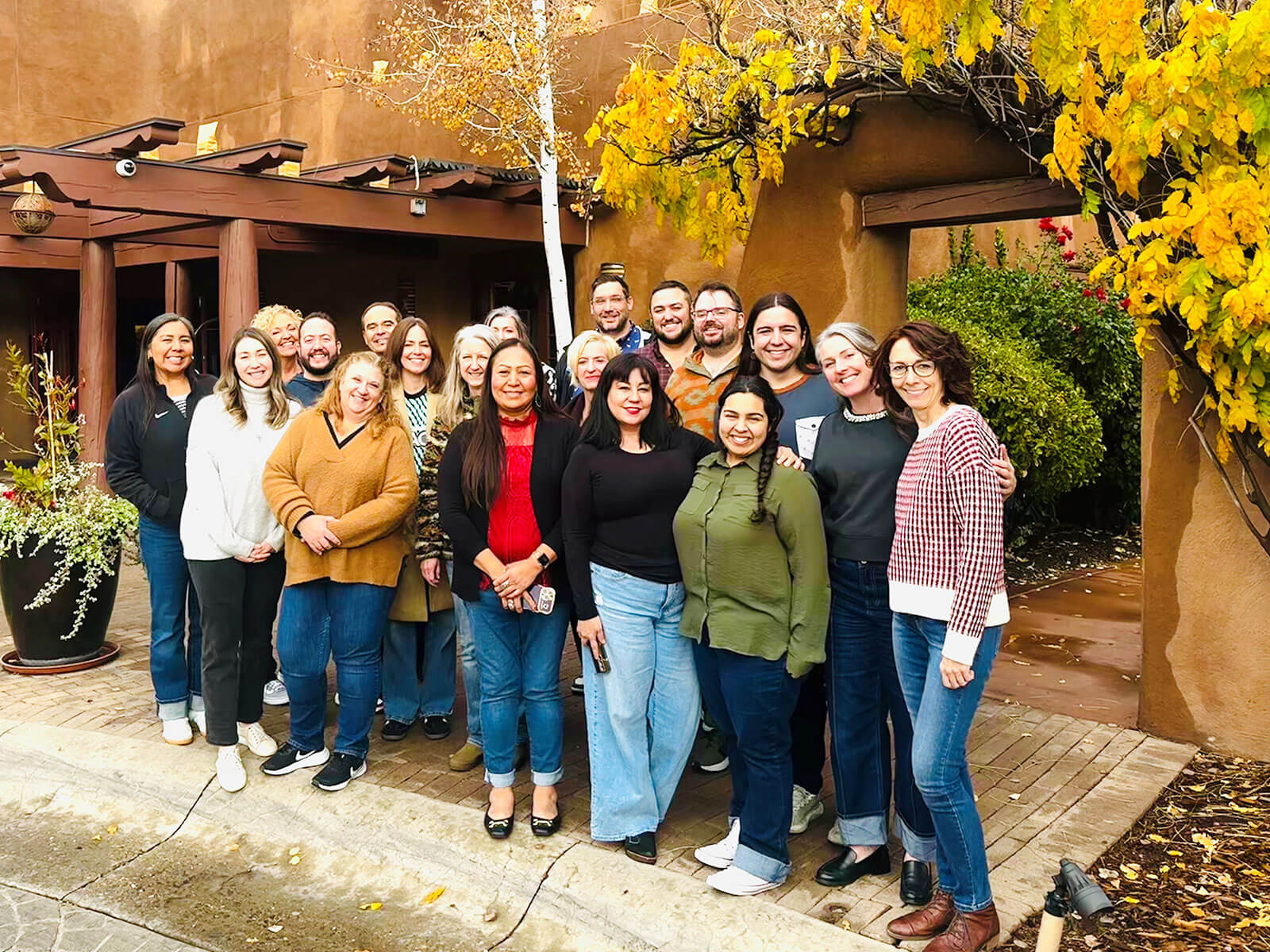
For many participants, the experience was both demanding and energizing. Fellow Michelle Lindholm said the Academy created a space where people from very different backgrounds could be honest and open with one another. “The beginning sessions together were designed to make us vulnerable and safe with one another to really be honest and transparent in our discussions,” she said. “In my experience, everyone was kind and respectful when we were discussing very personal and sensitive topics.”
That environment mattered because the fellowship brought together people who often work toward the same goals from very different angles. Fellow Thomas Chynoweth said one of the strongest parts of the experience was being in a room full of people committed to doing better for Albuquerque. “Something that continually came up throughout the ten months was how committed everyone was to being open minded, curious, and motivated,” he said. “We’d all experienced the frustrations of being siloed into a sector, and saw the need for more cross communication. It was exciting to be in a space of people who believed in what was possible for Albuquerque and wanted to learn how they could push it forward.”
Participants said the Academy helped them look beyond individual programs and focus on the bigger picture. Fellow Kathy Steen said the fellowship gave her “the space to step back” and think about the systems shaping workforce outcomes. “We weren’t asked to rush to solutions,” she said. “We were asked to understand how policy, funding, employer practices, and human behavior interact, and where those interactions unintentionally limit opportunity.” She said the experience reinforced a simple but important lesson: “lasting and impactful change requires shared understanding and trust, not just good programs.”
As fellows dug into the work, several major barriers rose to the surface. Chynoweth identified transportation, housing, the cost of training, prejudice and discrimination, and “narratives of defeat” as some of the most pressing challenges facing today’s workforce.
The Academy did not stop at identifying challenges. Fellows worked in cross-sector teams on collaborative action learning projects, studying key issues and developing recommendations grounded in what they were hearing from workers, employers, and service providers.
Chynoweth’s group focused on New Mexico’s disengaged workforce, especially men ages 25 to 55, and developed recommendations aimed at helping more people enter and stay in the workforce. “My team’s project was focused on creating recommendations to help with New Mexico’s disengaged workforce,” he said. Their recommendations called for stronger coordination between employers and training providers, more paid short-term training opportunities, and more coaching and case management built into workforce systems.
Steen’s team took a strengths-based approach and looked at what is already working in New Mexico. “Our team focused on understanding workforce disengagement by examining what is already working in New Mexico,” she said. “The last thing we need is more attention on the negative narrative.” Her team found that programs are most effective when they reduce friction, offer paid and short-term work-based learning, engage employers early, and stay connected to workers beyond the initial placement.
Fellow David Martinez’s group focused on the workforce ecosystem in the Central Region of New Mexico. How can we improve visibility, connectivity, and links to available resources? He said the team’s goal focused on how to help the central region better understand, align and connect its existing workforce assets. “Our recommendation centered on the central region hosting a convening within the existing workforce ecosystem, and work to fund and develop an asset map of the central region,” he said, so employers, nonprofits, and government agencies can more easily see what resources exist, identify opportunities for workforce development, and where support is needed.
Participants also made clear that strong facilitation helped turn a diverse group into a true working cohort. Martinez specifically praised the leadership behind the program, saying, “The facilitators that the Aspen Institute put in place, Justin Hilliard (Workforce Development Liaison, City of Albuquerque) and Mary Hubbell-Ansera (Senior Director of Work-Based Learning, CNM), were just amazing facilitators and helped to move us along over that one-year period together.” That kind of steady leadership helped foster an environment where honest conversations could happen, ideas could be tested, and collaboration could take root.
“Justin Hilliard played a major role in making this Academy successful. He helped create a space where people from different sectors could have honest conversations, learn from one another, and stay focused on solutions. His facilitation kept the work moving forward and helped turn a diverse group of fellows into a connected cohort.”
By the end of the Academy, fellows had built more than a set of recommendations. They had built stronger relationships, a deeper understanding of Albuquerque’s workforce challenges, and a clearer sense of what it will take to move the city forward.
“Being part of the Workforce Leadership Academy helped me see how many pieces have to come together for workforce development to truly work,” said Fellow Monica Sandoval Johnson. “We can’t look at education, training, and employment as separate efforts. They have to be connected and aligned. The Academy gave us the opportunity to step outside of our individual roles, learn from each other, and start thinking about solutions that are more coordinated, more equitable, and ultimately more effective for the people we serve.”
Together, their reflections make the impact of the Academy clear. Albuquerque already has talented leaders, strong organizations, and people committed to the work. The Aspen Institute’s Workforce Leadership Academy gave those leaders the time, structure, and support to collaborate, think bigger, and take action across Albuquerque’s workforce ecosystem.